
You had the dream. Buy a property, find a great tenant, and watch the direct deposits roll in every month. A beautiful, simple path to passive income. Then reality hit. The 2 AM phone call about a burst pipe. The awkward text chain chasing down late rent. The weekend you spent showing the unit to ten different people, only for none of them to pan out.
Suddenly, “passive” income feels suspiciously like a second job. And that leads you here, asking the one question every landlord eventually faces: how much does property management cost?
The simple answer is a percentage. But the simple answer is wrong. The true cost of property management isn’t just a number; it’s an investment. It’s an investment in your time, your sanity, and the long-term health of your asset. So, let’s pull back the curtain. In this guide, we’re going to decode the common fee structures, expose the “hidden” costs you absolutely need to look for, and help you calculate if this investment actually makes sense for you.
The Big Two: Common Property Management Fee Structures
Think of property management fees like cell phone plans. You can go with a plan where your bill changes based on usage, or you can opt for a predictable, flat monthly rate. Neither is inherently better, but one is likely a better fit for your specific property and financial style.

The Percentage of Rent Model (The Industry Standard)
This is the one you’ve most likely heard about. The vast majority of property management companies use this model, charging a percentage of the monthly rent they successfully collect.
Typically, this fee ranges from 8% to 12% of the collected monthly rent. So, if your property rents for $2,500 a month and your manager charges a 10% fee, you’ll pay them $250 for that month. Simple as that.
- The Pro: This model creates aligned interests. The property manager is motivated to get you the highest possible market rent and to fill vacancies quickly. Why? Because the more money you make, the more money they make. They don’t get paid if the property is sitting empty (usually… more on that later).
- The Con: The cost isn’t fixed. If you raise the rent from $2,500 to $2,700, your management fee also goes up. It’s not a huge deal for most, but it’s less predictable than a flat fee.
An important detail here is the phrase “collected rent.” A reputable manager only charges you a fee on rent they actually have in hand. If a tenant pays late, your manager gets paid late.
The Flat-Fee Model (Predictable & Simple)
On the flip side, some companies, particularly those managing large multi-family buildings or apartments with very similar units, offer a flat-fee structure. Instead of a percentage, you pay a fixed dollar amount every month, per unit.
This fee can range anywhere from $100 to $300 per unit, depending on the market and services included. Whether your unit rents for $1,500 or $1,800, your fee remains the same.
- The Pro: Budgeting is a breeze. You know exactly what your management expense will be every single month, without fail. This predictability can be very appealing for landlords who want to keep their spreadsheets tidy.
- The Con: There’s potentially less incentive for the manager to maximize your rent. Since their fee isn’t tied to the rental amount, they might not be as aggressive in pushing for market-rate increases at lease renewal time.
A Quick Note on Hybrid & Vacation Rental Models
Of course, the world isn’t always so black and white. Some companies might offer hybrid models, like a lower flat fee plus a performance bonus for keeping the unit occupied. But the biggest exception to the 8-12% rule is the short-term vacation rental market.
Managing a property on Airbnb or VRBO is a completely different beast. It involves constant guest communication, managing cleaning crews between every stay, handling bookings, and marketing across multiple platforms. Because of this significantly higher workload, managing a vacation rental in a tourist destination like Phuket can command a much higher percentage, often between 20% and 40% of the gross booking revenue.
👉 À lire aussi : How Much Does a Property Manager Cost? The 2024…
Beyond the Monthly Fee: A La Carte Costs You Can’t Ignore
This is the most important section of this article. If you only remember one thing, let it be this: the monthly managment fee is just one piece of the puzzle. A company advertising a super-low 6% monthly fee might be burying other charges in the fine print that make them far more expensive than a company charging a straightforward 10%.
Here are the seperate, a la carte fees you must ask about before signing any agreement.
Tenant Placement & Leasing Fees (The Big One)
This is the fee for the intensive work of finding you a high-quality tenant. It’s a one-time charge when a new tenant moves in, and it’s completely seperate from the monthly management fee. It typically costs between 50% to 100% of the first month’s rent.
What does this fee cover? A whole lot, actually:
👉 Pour aller plus loin : Property Management: The Landlord's Ultimate Guide to…
- Professional rental photography
- Writing compelling ad copy and marketing the property across dozens of websites
- Fielding all inquiries from prospective tenants
- Conducting in-person or virtual showings
- Processing applications and performing extensive screening (credit checks, background checks, eviction history, income verification)
- Drafting and executing the legally-compliant lease agreement
This is arguably where a great property manager provides the most value. A bad tenant can cost you thousands in lost rent and damages; a great tenant is priceless.
Lease Renewal Fees
When a great tenant’s lease is about to expire, the manager will handle the process of negotiating and signing a renewal. For this service, many companies charge a small flat fee, perhaps $150 to $300. It’s a small price to pay to keep a reliable tenant in place and avoid the cost and hassle of a full turnover.
Maintenance & Repair Markups
How are repairs handled? This is a critical question. Some companies coordinate maintenance as part of their monthly fee. Others add a surcharge or markup on top of the vendor’s invoice, typically around 10%. So, if a plumber’s bill is $200, you’ll see a $220 charge on your statement.
This isn’t necessarily a bad thing (it compensates them for the time spent coordinating), but it needs to be transparent. Also, ask about their maintenance reserve. Most managers require you to keep a small amount of money, like $300-$500, in a trust account. This allows them to pay for small repairs quickly without having to bother you for every little thing.
Eviction Fees
Hopefully, you never need this. But if you do, you’ll be glad for the help. If a tenant needs to be evicted, the property manager will handle the process of serving notices and coordinating with the attorney. For this time and administrative work, they’ll charge a flat fee, often between $200 and $500, plus any court and legal fees.
📖 Dans le même thème : Residential Property Management: The Landlord's…
The Dreaded Vacancy Fee (A Major Red Flag)
Watch out for this one. Some companies will try to charge you a monthly fee even when your property is vacant. They might call it a “reduced fee” or a “marketing fee.”
My professional advice: Run. A property manager should only get paid when you get paid. Their financial success should be directly tied to yours. Charging you money while your property is bleeding cash is a sign of deeply misaligned interests.
To make this concrete, here’s a sample fee breakdown for a fictional $2,000/month property in the first year with one new tenant:
- Monthly Management Fee (10%): $200/month x 12 months = $2,400
- Tenant Placement Fee (75% of one month’s rent): $1,500 (one-time)
- Total Year 1 Cost: $3,900
As you can see, the one-time leasing fee is a significant part of the total cost. This is why understanding the full fee schedule is so vital when you’re trying to figure out how much property management cost will truly impact your bottom line.
What Factors Influence Your Final Quote?
You won’t find a “one-size-fits-all” price list on a property manager’s website, and for good reason. The final quote is customized based on the specific needs of your property. Here are the main drivers.
📖 Vous aimerez aussi : Success Property Management: Proven Strategies to…

Property Type, Size, and Condition
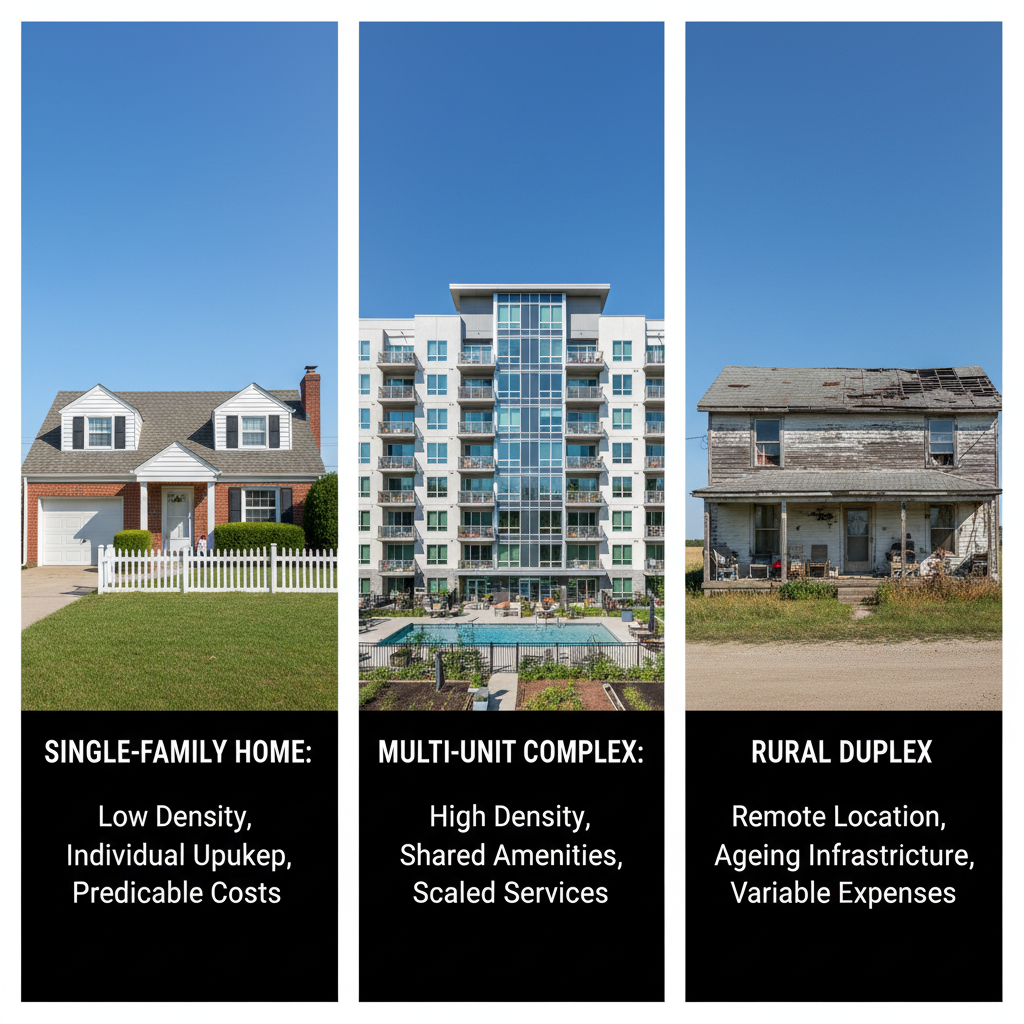
It’s simple, really: more work equals a higher fee. A single-family home is generally easier to manage than a four-plex with four seperate leases. An older property built in 1965 that needs constant repairs will definately cost more to manage than a brand-new, turnkey condo with appliances still under warranty.
Location, Location, Location
Management fees, like everything else, are influenced by the local market. Costs in a high-cost-of-living city like San Francisco will be higher than in a small town in the Midwest. Even within a single market, costs can vary. A luxury beachfront villa in Phuket will command a higher management fee than a small apartment in town, reflecting the higher rent and the higher expectations for service and maintenance.
Scope of Services Included
Not all management services are created equal. Are you getting a basic “rent collection and emergency calls” package? Or are you getting a full-service, white-glove experience? A premium service might include:
- Detailed monthly and year-end financial statements
- Handling all HOA communications and violations
- Conducting bi-annual property inspections with detailed reports and photos
- 24/7 emergency maintenance handling
- Online portals for both owners and tenants
The more comprehensive the service, the higher the fee. But for a busy investor, these extra services can be worth their weight in gold.
Calculating the Real ROI: Is Property Management Worth the Cost?
We’ve spent a lot of time talking about “cost.” Now, let’s shift the conversation to “value” and “return on investment.” The fee you pay isn’t just an expense; it’s a purchase. You’re purchasing your time back, you’re purchasing expertise, and you’re purchasing peace of mind.
📖 Article connexe : Success in Property Management Isn't Luck: It's a…
The Monetary Value of Your Time
Try this quick exercise. For one month, track every single hour you spend on your rental property. That includes answering texts, calling plumbers, driving to the property, doing paperwork, everything. Let’s say it’s 10 hours.
Now, what’s your time worth? If you’re a lawyer who bills at $300/hour, you just spent $3,000 of your time to save a $250 management fee. Even if you value your free time at a more modest $50/hour, that’s still $500 in time you spent. Is that a good trade?
Hard-Dollar Savings: Reduced Vacancy & Better Tenants
This is where the numbers get really compelling. A great property manager can save you real money.
- Reduced Vacancy: A professional manager has an efficient, repeatable process for turning over a unit. They start marketing before the old tenant moves out, they have a list of pre-screened applicants, and they can show the property at a moment’s notice. If they can rent your $2,500/month property just two weeks faster than you could on your own, they’ve just saved you $1,250. That one action can pay for five months of their fee.
- Better Tenants: Rigorous, professional tenant screening is your single best defense against an eviction. An eviction can easily cost $3,000 to $5,000 (or more) in legal fees and lost rent. Paying a one-time leasing fee to a manager who properly vets tenants is an insurance policy against a massive financial headache.
The Unquantifiable Value of Peace of Mind
What is it worth to you to never again receive a call about a clogged toilet on a Saturday night? What is it worth to go on a two-week vacation without checking your phone every hour, worried about your property?
This is the benefit that, for many landlords, seals the deal. It’s the freedom to focus on your career, your family, and your hobbies, knowing that your investment is being handled professionally. You transition from being a hands-on landlord to being a true investor, and that mental shift is priceless.
Conclusion: How to Choose Wisely
So, we’ve come full circle. The true cost of property management is a combination of a monthly fee (either percentage-based or flat) and several occassionally-used a la carte fees for major events like placing a new tenant.
My final piece of advice is this: do not choose a property manager based on price alone. The company with the rock-bottom monthly fee is rarely the best value. They often make up the difference with hidden fees, poor service, and slow response times that lead to longer vacancies and frustrated tenants.
Your goal should be to find the best value, not the lowest price. Look for a company with a transparent, easy-to-understand fee structure. The best ones are proud of the value they provide and are happy to explain every line item in their agreement.
Before you sign anything, get quotes from at least three different companies. Read their management agreements carefully. And most importantly, ask them the right questions. Your future peace of mind depends on it.
Questions to Ask a Potential Property Manager:
- What is your monthly management fee, and is it based on rent collected or rent due?
- What is your tenant placement or leasing fee, and what services does it include?
- Do you charge a lease renewal fee?
- How do you handle maintenance? Do you add a markup to vendor invoices?
- What are your fees for handling an eviction?
- Do you charge any fees while the property is vacant?
- What services are included in the monthly fee versus what costs extra?
FAQ
What is the typical fee for property management services?
Most property management companies charge a monthly fee that is a percentage of the collected rent, typically ranging from 8% to 12%. Some companies offer a flat-fee model instead, which provides a predictable monthly cost regardless of the rent amount. The exact rate can depend on your property’s location, type, and the number of units you have.
Are there other fees besides the monthly management fee?
Yes, it’s common for companies to have other fees, so you should always ask for a full fee schedule. These can include a one-time setup fee, a leasing fee for finding and placing a new tenant (often 50-100% of the first month’s rent), and a lease renewal fee when a tenant extends their stay.
How is the management fee calculated – on rent collected or rent due?
This is a crucial detail to clarify in your management agreement. Most reputable companies charge their fee based on ‘rent collected,’ meaning they only get paid when your tenant pays rent. A ‘rent due’ model means you pay the fee even if the property is vacant or the tenant is late, which is less favorable for property owners.
What services are usually included in the standard management fee?
The standard fee typically covers the core, day-to-day operations of managing your property. This includes collecting rent, handling tenant communications and requests, coordinating routine maintenance and repairs, and providing you with regular financial statements on income and expenses.