
Let’s be honest. You’re here because you typed some version of “how much to property managers charge” into a search bar, hoping for a simple, single number. A nice, clean percentage you could plug into a spreadsheet.
I have some bad news and some good news.
The bad news is, there isn’t one simple answer. The cost of a property manager isn’t a fixed price like a gallon of milk. It’s a nuanced service with a fee structure that can range from beautifully simple to maddeningly complex. But the good news? You’ve come to the right place to have it all decoded.
Before we dive into the numbers, let’s reframe the question. You’re not just buying a service; you’re making an investment. An investment in protecting what is likely one of your largest assets. An investment in reclaiming your weekends from leaky faucets and tenant phone calls. Think of a property manager less like an expense and more like a financial advisor for your physical real estate. You’re paying for expertise, market knowledge, and a buffer between you and the inevitable headaches of being a landlord.
So, let’s pull back the curtain. We’re going to break down every single fee, from the obvious monthly percentage to the sneaky fine print charges you absolutely need to watch out for.
So, You’re Thinking About a Property Manager. But What’s the Damage?
You’ve done the math. You know that a rental property can be a fantastic engine for long-term wealth. But you’ve also heard the horror stories: the 2 a.m. calls about a burst pipe, the tenant who vanishes in the middle of the night, the endless cycle of showings and screenings. It’s enough to make anyone wonder if it’s worth the trouble.
This is where the idea of a property manager enters the picture, promising peace of mind and professional oversight. But that peace of mind comes with a price tag. The central question for every property owner is whether that price is justified.
The truth is, a good manager pays for themselves. They do this through shorter vacancy periods, higher quality tenants who pay on time and cause less damage, and access to a network of vetted vendors who don’t overcharge for repairs. A bad manager, on the other hand, can be a financial black hole.
The key is knowing the difference. And that starts with understanding exactly what you’re paying for.
👉 À lire aussi : How Much Does a Property Manager Cost? The 2024…
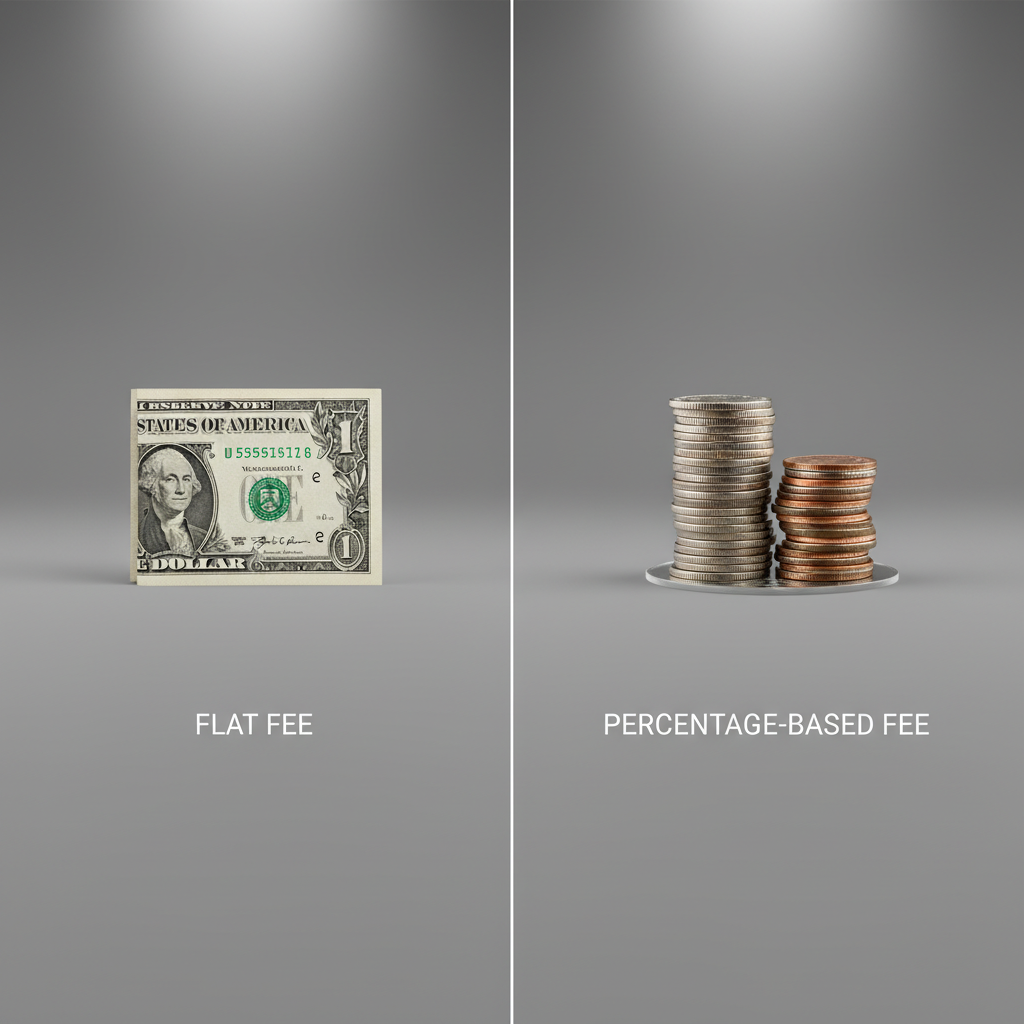
The Two Main Fee Models: A Head-to-Head Comparison
When you start shopping for a property manager, you’ll quickly find their pricing models fall into two main camps. Each has its own logic, and the right one for you depends entirely on your property, your market, and your personal risk tolerance.
The Percentage of Rent Model (The Industry Standard)
This is, by far, the most common fee structure you’ll encounter. The property management company charges a percentage of the property’s monthly rental income. This fee typically ranges from 8% to 12% of the monthly rent.
The single most important detail here is to ensure the fee is based on rent collected, not rent due. This is a critical distinction. If the fee is based on collected rent, the manager only gets paid if you get paid. It perfectly aligns their interests with yours. If a tenant doesn’t pay, the manager has a powerful financial incentive to resolve the issue, whether through collection efforts or eviction.
Example: Your property rents for $2,000 per month. Your management agreement is for a 10% fee. When the tenant pays their rent, the manager retains $200 and sends you the remaining $1,800. If the property is vacant for a month, you both get nothing.
- Pros: Incentivizes the manager to find a paying tenant quickly and to handle non-payment issues promptly. The cost scales directly with the income of your property.
- Cons: The fee isn’t a fixed number, which can make budgeting slightly less predictable. If you offer a tenant a temporary rent discount for any reason, your management fee also decreases.
The Flat-Fee Model (Predictability is King)
Less common but gaining traction in some markets, the flat-fee model is exactly what it sounds like. The manager charges a fixed dollar amount every month, regardless of the rent collected. This fee can range from $100 to $250 per unit, per month.
📖 Lire aussi : The True Cost of Property Management: A Complete 2024…
This model appeals to owners who crave absolute predictability in their monthly expenses. You know exactly what you’ll be paying for management services every single month, no surprises.
- Pros: Extremely easy to budget for. For owners with high-rent properties, a flat fee can often be significantly cheaper than a percentage-based fee.
- Cons: The manager has less of a direct financial incentive to maximize your rent. If they rent your $3,000/month property for $2,800 just to get it filled quickly, their income doesn’t change. Their motivation is purely to keep the unit occupied, not necessarily at the highest possible market rate.
So, which is better? For most standard single-family homes or small multi-family properties, the percentage of collected rent model is the industry standard for a reason. It creates a true partnership. For owners of high-end luxury properties, a flat fee might offer significant savings and is worth exploring.

Beyond the Monthly Fee: The ‘A La Carte’ Menu of Charges
This is where many new landlords get into trouble. You get quoted a low monthly management fee of, say, 7%, and think you’ve found a bargain. What you don’t realize is that the company makes up for that low rate by charging extra for nearly everything else. Understanding these “a la carte” fees is the key to avoiding a nasty surprise on your first owner statement.
The Big One: Leasing & Tenant Placement Fees
This is a one-time fee charged for the significant work involved in finding and placing a new, qualified tenant. It’s almost always seperate from the monthly management fee.
📖 Dans le même thème : Residential Property Management: The Landlord’s…
- Cost: Typically ranges from 50% to 100% of the first full month’s rent.
- What it covers: This is an intensive process. It includes professional photography, writing compelling marketing copy, listing the property on dozens of websites, coordinating and conducting showings (which can take weeks), and, most importantly, a rigorous tenant screening process. This screening should include credit checks, national criminal background checks, eviction history reports, and verification of employment and income. It also covers the cost of lease preperation and signing.
The ‘Hidden’ Costs: Maintenance, Renewals, and More
Here are the other common fees you need to have on your radar:
- Lease Renewal Fee: When a great tenant’s lease is about to expire, you want to keep them. A manager may charge a small flat fee (e.g., $200-$300) to handle this process. The work involves analyzing current market rates to see if a rent increase is justified, negotiating the new terms with the tenant, and drafting and executing the new lease documents.
- Maintenance Markups: This is a big one to ask about. Some companies add a surcharge, often 10-15%, to invoices from outside vendors (plumbers, electricians, etc.). A transparent company will have no problem showing you the original, unedited invoice. An opaque one will hide this markup. Always ask: “Do you add a surcharge to vendor bills?”
- Eviction Fees: Should the worst happen, the eviction process involves extra work. Managers will charge for this, often as a flat fee for serving legal notices (e.g., $300) plus an hourly rate for court appearances (e.g., $150/hour), in addition to any actual court costs.
Red Flag Fees to Watch Out For
Some fees aren’t just extra; they’re signs of a potentially problematic company. Be very wary if you see these:
- Vacancy Fees: This is a massive red flag. Some low-cost managers will try to charge you their monthly management fee even when the property is empty. A good partner only gets paid when you get paid. Period.
- Account Setup Fees: A nominal fee ($50-$100) might be reasonable for complex portfolios, but a large setup fee is often just a way to squeeze more money out of you upfront.
- “Technology” or “Administrative” Fees: Vague, recurring monthly fees with no clear justification are a sign of fee-stacking. Ask exactly what this covers.
- Early Contract Termination Fees: While these are common, they can be predatory. A reasonable fee might be one or two months of management fees. An unreasonable one might demand payment for the entire remaining term of the contract. Make sure you understand your exit strategy.

What’s a ‘Normal’ Price? A Realistic Breakdown
After seeing that long list of potential fees, you’re probably still wondering what a normal, all-in cost looks like. The answer, frustratingly, is: it depends. National averages can be misleading because property management is a hyperlocal business.
How Location Drastically Affects Your Costs
The cost to manage a property is directly tied to the cost of doing business in that area. A management company in San Diego, with its high rents and high cost of labor, will definitly charge more than one in a small town in Ohio.
📖 Vous aimerez aussi : Property Management: The Landlord’s Ultimate Guide to…
The type of market also plays a huge role. For example, managing a long-term rental in a residential neighborhood is one thing. But managing a short-term vacation villa in a global tourist destination like Phuket, Thailand, is an entirely different business model. This involves constant guest communication, managing cleaning crews for rapid turnovers, marketing on platforms like Airbnb and VRBO, and concierge-level services. As a result, vacation rental management fees are much higher, often ranging from 20% to 40% of the gross booking revenue.
Property Type Matters (A Lot)
The nature of your property also influences the cost. A brand-new, single-family home is relatively easy to manage. An older 20-unit apartment building, on the other hand, presents more challenges but also allows for economies of scale. A manager might charge 10% for the single home but offer a lower per-unit rate of 6-8% for the apartment building because their costs are spread across more units.
The ‘You Get What You Pay For’ Principle in Property Management
This might be the most important concept to grasp. It is incredibly tempting to choose the manager with the lowest monthly fee. Please, resist that temptation.
The manager charging 6% might be cutting corners on tenant screening. If they place a bad tenant who pays late, damages your property, and ultimately needs to be evicted, that “cheaper” manager has just cost you thousands of dollars and months of stress. The great manager at 10% who has a bulletproof screening process and secures a fantastic, long-term tenant is, without question, the better financial choice.
📖 Article connexe : Beyond the Keys: What Does a Property Manager Actually…
Don’t focus on the fee. Focus on the value and the return on investment (ROI). The goal is to minimize your two biggest expenses: vacancy and turnovers.
How to Choose a Manager (And Not Get Gouged on Fees)
You’re now armed with the knowledge to see beyond the sticker price. The final step is putting that knowledge into action when you interview potential managers. Being prepared with the right questions is your best defense against hidden fees and bad actors.
The 7 Questions You Must Ask About Their Fee Structure
When you sit down with a potential property manager, have this list ready. Their willingness and ability to answer these questions clearly and confidently will tell you everything you need to know.
- Is your monthly management fee based on rent collected or rent due?
- What, specifically, is included in your tenant placement fee? Does it cover all marketing costs?
- Do you charge a lease renewal fee if we keep a tenant in place?
- Do you charge any fees whatsoever while the property is vacant?
- Do you add a markup or surcharge to maintenance and repair bills from vendors? If so, how much is it, and will you provide the original invoices?
- What are all the potential costs involved if I need to evict a tenant?
- What is your fee or penalty for terminating our management agreement early?
Read the Management Agreement. No, Seriously, Read It.
I can’t stress this enough. The property management agreement is a legally binding contract that outlines the entire professional relationship. All the fees they just told you about must be clearly detailed in this document. Occassionally, a property owner will be in such a hurry that they just sign on the dotted line. Don’t be that person.
Pay special attention to the sections titled “Fees and Charges” and “Termination.” If the language is vague, confusing, or contradicts what you were told verbally, that’s a red flag. A good property manager in a competitive market, whether it’s Austin or Phuket, will have a transparent agreement they are happy to walk you through, line by line.
The Bottom Line: It’s an Investment, Not an Expense
So, how much do property managers charge? The answer is a combination of a primary fee model (either a percentage of rent or a flat fee) and a collection of other potential charges for specific services like leasing, renewals, and maintenance coordination.
Your goal shouldn’t be to find the absolute cheapest manager on the market. That’s often a recipe for disaster. Your goal is to find the manager who provides the best value. The one who acts as a true partner in protecting and growing your investment.
When you find that partner, you’ll realize the truth. A great property manager doesn’t cost you money; they make you money through higher rents, better tenants, shorter vacancies, and the priceless return of your own time and peace of mind. Choose wisely.
FAQ
What is a typical property management fee?
Most property management companies charge a monthly fee that is a percentage of the collected rent, typically ranging from 8% to 12%. Some companies may offer a flat-fee structure, where you pay a fixed amount each month regardless of the rental income.
Are there other fees besides the monthly management fee?
Yes, it’s common for companies to charge additional fees for specific services. These can include a leasing fee for finding and placing a new tenant (often 50-100% of the first month’s rent), a lease renewal fee, and sometimes a maintenance markup on vendor invoices.
How is the monthly management fee calculated?
It’s important to clarify if the fee is based on ‘rent collected’ or ‘rent due.’ A fee based on rent collected is generally preferred, as it means you don’t pay a management fee for a vacant unit, aligning the manager’s interests with yours.
What services are usually included in the standard management fee?
The monthly fee typically covers the core, day-to-day operations of managing your property. This includes rent collection, handling tenant communication and requests, coordinating routine maintenance and repairs, and providing you with monthly financial statements.